AI Chatbot Development Services for Business Websites
AI Chatbot Development Services for Business Websites
Most website visitors never contact you. They skim your pages, fail to find the answer to their specific question, and leave. A well-built AI chatbot changes that dynamic: it meets visitors at the moment of uncertainty, answers in plain language, and moves them toward a call, a booking, or a purchase — at 2 AM as easily as 2 PM.
But there’s a wide gap between a chatbot that works and one that embarrasses you. The difference is in the build: how it understands intent, what data it can access, where it hands off to humans, and how it’s integrated with your site. This guide covers what professional ai chatbot development services deliver, what the concrete capabilities look like, and what to expect on cost and timeline.
What an AI Chatbot Actually Does on a Business Website
Forget the scripted decision trees of five years ago. Modern AI chatbots built on large language models handle open-ended conversation, but the useful ones are tightly scoped to your business. Here’s what they do well:
Support deflection. The chatbot answers the repetitive questions that eat your team’s time: pricing details, service areas, turnaround times, return policies, “do you work with X?” A good build resolves 40–70% of routine inquiries without human involvement. The key is grounding answers in your actual content — service pages, FAQs, documentation — so it doesn’t invent policies you don’t have.
Product and service recommendations. For ecommerce and service businesses, the chatbot acts as a guided selling layer: “I need a laptop for video editing under $1,200” or “which of your plans covers multi-site WordPress?” It narrows options from your catalog, explains trade-offs, and links directly to the right product or booking page. This is where chatbots measurably lift conversion — they do the consultative work your product pages can’t.
Bookings and lead capture. The chatbot qualifies visitors conversationally (“What kind of project? What’s your timeline? What’s your budget range?”) and books them into your calendar or CRM. Unlike a static form, it handles objections in real time — “I’m not sure about budget” gets a helpful response instead of an abandoned form.
Order and account assistance. For WooCommerce and membership sites: order status lookups, shipping questions, password resets, subscription changes. These are high-volume, low-complexity interactions that are perfect for automation, provided the bot has secure, read-scoped access to your order system.
Internal knowledge assistants. The same technology, pointed inward: a chatbot trained on your SOPs, product docs, or HR policies that your team queries instead of digging through shared drives. Many of our builds start as customer-facing and expand here.
What AI chatbots are bad at (honest limitations)
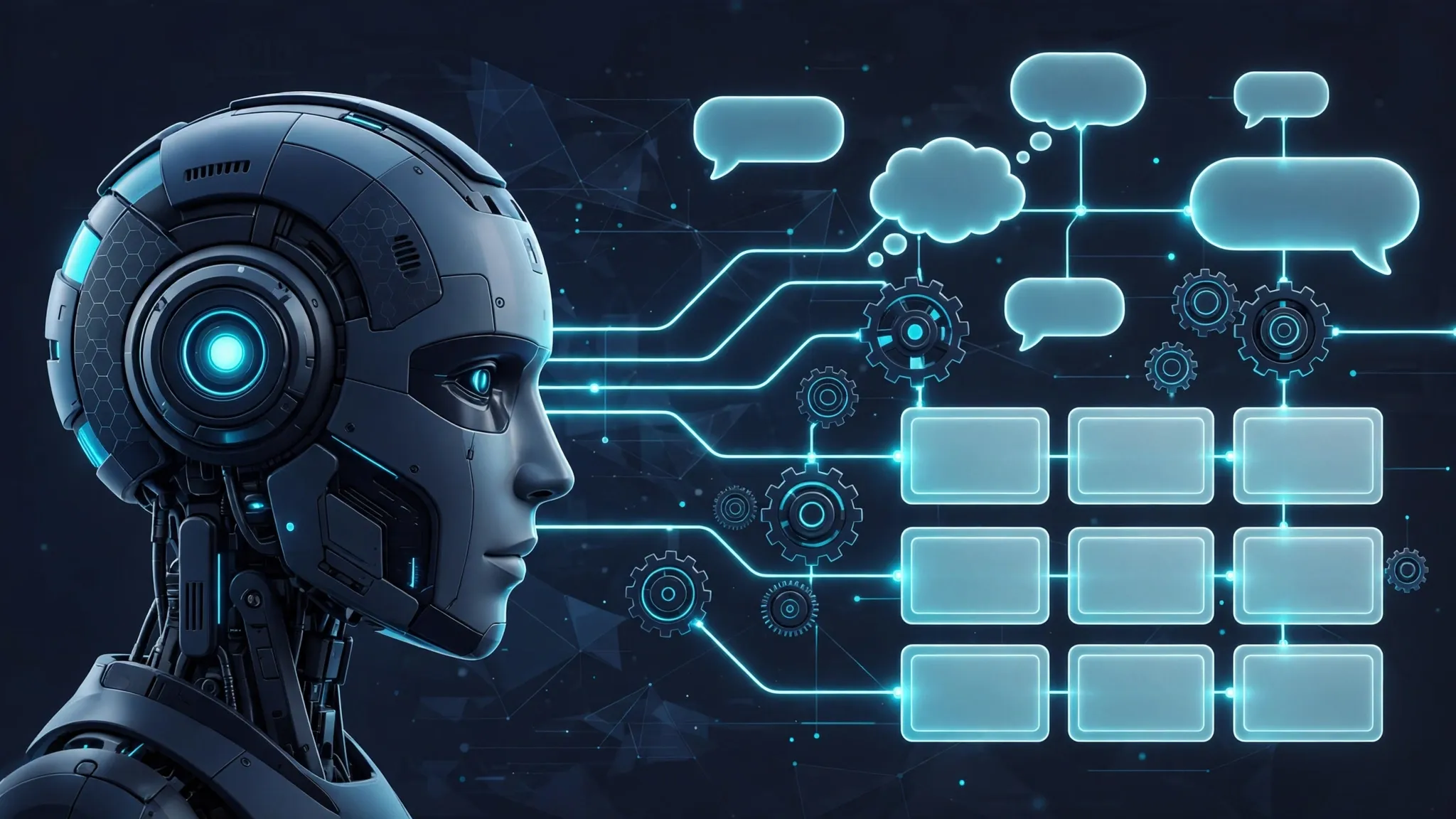
They shouldn’t handle emotionally charged complaints alone — a frustrated customer needs a human, fast, and the bot’s job is to recognize that and escalate. They shouldn’t make promises about pricing, availability, or legal matters without verified data sources. And they need ongoing tuning: launch is the starting line, not the finish. Any provider that sells you a chatbot as a one-time, set-and-forget product is selling you a future embarrassment.
How Professional AI Chatbot Development Services Build Them
A serious build follows a process, not a plugin install. Here’s the shape of it:
1. Use-case definition and data audit. We identify the top 20–50 questions your visitors actually ask (support tickets, emails, and analytics tell us), and audit what content exists to answer them. Gaps get written before the bot launches — a chatbot is only as good as its knowledge base.
2. Knowledge base construction. Your content gets structured into a retrieval layer: FAQs, service descriptions, policies, product data. For catalogs, this often means a live connection to your product database rather than a static copy, so the bot never recommends a discontinued item.
3. Conversation design. This is the unglamorous work that determines success: defining the bot’s persona and tone, mapping conversation flows, writing fallback responses for out-of-scope questions, and — critically — designing the handoff. Every bot needs a clear path to a human: live chat takeover, callback request, or ticket creation.
4. Integration. The chatbot connects to your site (WordPress, WooCommerce, or custom), your CRM, your booking system, and your analytics. Conversations should create leads in your CRM automatically, not sit in a separate dashboard nobody checks.
5. Guardrails and testing. Prompt-level constraints keep the bot on-topic and honest: it cites sources, says “I don’t know” when it should, and refuses to hallucinate prices or policies. Then adversarial testing — we try to break it before your customers do.
6. Launch, monitor, iterate. We review real conversations weekly in the first month, fix misfires, expand the knowledge base, and tune. A chatbot that improves monthly will outperform a “perfect” launch build within a quarter.
AI Chatbot Development: Realistic Costs and Timelines
Pricing depends on scope, integrations, and whether you’re using a platform or a custom build:
Simple FAQ/lead-capture bot: $2,000–$6,000. Trained on your site content, answers common questions, captures leads into your CRM. Built on an existing platform with custom conversation design. Timeline: 2–4 weeks.
Integrated business chatbot: $6,000–$18,000. Product recommendations from a live catalog, booking integrations, order lookups, CRM sync, custom WordPress integration, multilingual support. This is the range most serious business sites land in. Timeline: 4–8 weeks.
Advanced / multi-system chatbot: $18,000–$50,000+. Multiple data sources, custom AI pipeline, internal + external deployments, analytics dashboards, compliance requirements (healthcare, finance). Timeline: 8–16 weeks.
Ongoing costs to budget for: the AI model API usage (typically $50–$500/month depending on volume), platform or hosting fees, and a maintenance retainer for tuning and knowledge-base updates ($300–$1,000/month is typical). Factor these in from the start — a chatbot without a tuning budget degrades.
Beware the $499 “AI chatbot” offers. At that price you’re getting a generic widget with your logo on it, no integration, no guardrails, and no one reviewing conversations. The risk isn’t wasted money — it’s a bot confidently giving wrong answers under your brand name.
WordPress-Specific Considerations
Since most of our chatbot builds live on WordPress sites, a few platform notes:
- Performance matters. A chatbot widget that adds 2 seconds to your page load is a net negative. We load chat interfaces asynchronously and keep the initial payload small — your Core Web Vitals shouldn’t move.
- WooCommerce integration is where the ROI is. Product search, order tracking, and cart recovery via chat consistently outperform generic FAQ bots on revenue impact.
- Data privacy. Conversations may contain personal data. Your build needs a clear data-retention policy, and if you serve EU visitors, GDPR-compliant processing with a data processing agreement from your AI provider.
WordPress privacy and data handling
How to Choose an AI Chatbot Development Partner
Ask prospective providers:
- Show me conversation logs from a bot you built (anonymized). How it handles failure tells you more than any demo of it succeeding.
- How do you prevent hallucinations? Listen for specifics: retrieval grounding, source citation, confidence thresholds, human review loops. Vague answers mean vague guardrails.
- What happens when the bot doesn’t know? There should be a designed escalation path, not an awkward loop.
- Who owns the training data and conversation logs? You should. Full stop.
- What’s the tuning plan after launch? If there’s no ongoing review process, the bot’s accuracy will decay as your business changes.
FAQ: AI Chatbot Development Services
How long does it take to build an AI chatbot?
A focused business chatbot takes 4–8 weeks from kickoff to launch, including knowledge-base preparation and testing. Simple FAQ bots can ship in 2–3 weeks. The biggest schedule risk is usually content gaps — if your policies and FAQs aren’t written down, that work has to happen first.
Will an AI chatbot replace my support team?
No — it replaces the repetitive 40–70% of their workload so they can handle the complex, high-value conversations. The best deployments pair the bot with a clear human handoff, and support teams consistently report higher job satisfaction when the bot takes the drudgery.
How accurate are AI chatbots? Can I trust what it tells customers?
Accuracy depends entirely on the build. A bot grounded in your verified content with proper guardrails is highly reliable for in-scope questions. A generic bot pointed at the open internet will invent answers. This is the single most important thing your development partner controls — ask how they handle it.
What does an AI chatbot cost per month to run?
Beyond the build cost, budget for AI API usage ($50–$500/month at typical small-business volumes), any platform fees, and a tuning retainer ($300–$1,000/month). High-traffic sites with heavy usage can exceed this — your provider should model it from your expected conversation volume.
Can a chatbot integrate with my CRM and booking system?
Yes — this is standard in a professional build. Conversations create or update CRM records, bookings flow into your calendar, and the bot can reference CRM data (with proper permissions) to personalize responses.
Do I need technical staff to manage the chatbot?
Not with a maintenance arrangement. Your provider should handle tuning, knowledge-base updates, and monitoring. You’ll want someone on your side who can flag when business details change (new pricing, new services) so the knowledge base stays current.
Build a Chatbot That Earns Its Place on Your Site
The businesses getting real value from AI chatbots aren’t the ones with the flashiest demos — they’re the ones that scoped the bot to real visitor questions, integrated it with real systems, and kept tuning it after launch. That’s a build discipline, not a technology trick.
If you want a chatbot that deflects support tickets, recommends the right products, and books qualified leads while you sleep, start the conversation with us. We’ll scope your use case honestly — including telling you if a chatbot isn’t the right tool for your problem.